






How the room moves through a sale
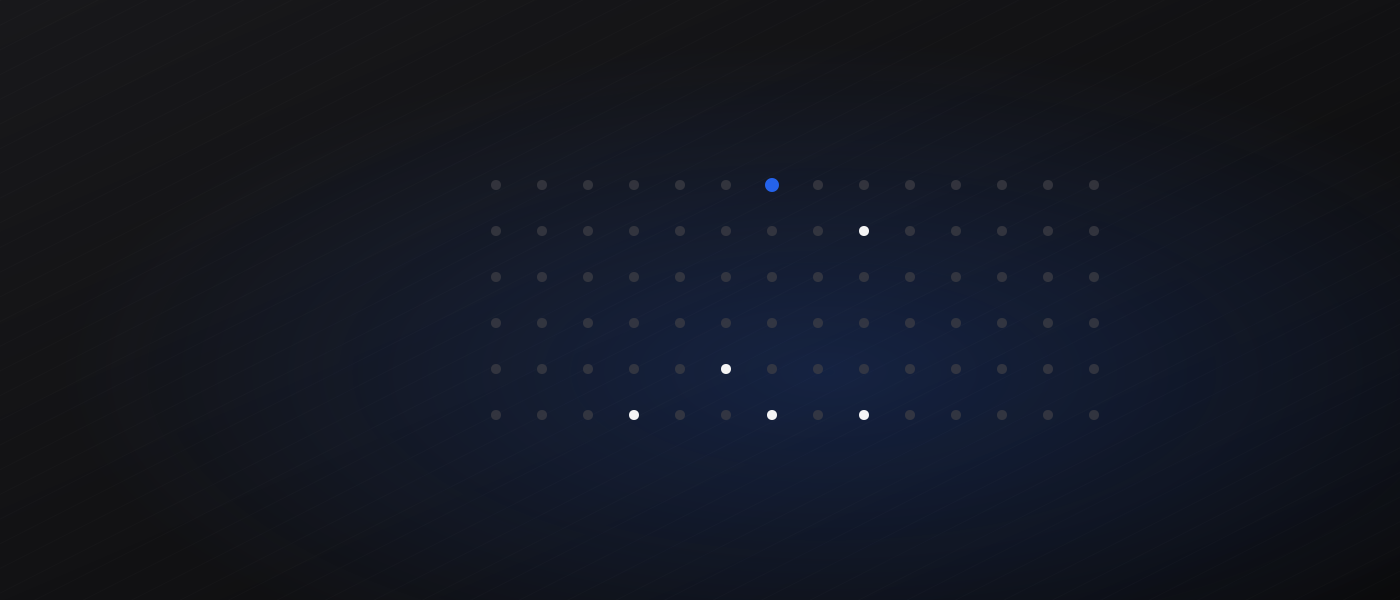
Most sell-side processes follow the same arc, whatever the sector. The figure shows an illustrative mid-market auction of about 17 weeks. Building the index, uploading and running the NDA round take roughly three weeks. The first round then runs for about three weeks on a limited set of folders. The second round, where the full room opens and Q&A peaks, takes around five. Signing to closing can add four more, and the archive and hand-over take the last two.
Where 17 weeks of a sale go
The timeline matters for two reasons: cost and permissions. A room billed monthly runs for four months at the least, and every phase changes who needs to be inside.
Readiness before the teaser goes out
The weeks before launch decide how smoothly the room runs later. A seller who gathers the core material early can open the first round on the day signed NDAs come back, instead of uploading in a hurry while bidders wait. The aim is not a perfect room on day one. It is a complete first layer and a clear plan for everything behind it.
What a seller prepares before launch
18core documents
6folders
01Corporate
- Group structure chart
- Constitutional documents
- Recent board minutes
02Financial
- Audited accounts
- Management accounts, year to date
- Budget and forecast
03Commercial
- Top customer contracts
- Key supplier agreements
- Pipeline summary
04People
- Organization chart
- Key employment terms
- Anonymized payroll summary
05Legal
- Litigation summary
- Material licenses and permits
- Intellectual property schedule
06Tax and property
- Tax returns and clearances
- Leases and title
- Insurance schedule
Prepare all six folders, but release only an outline of each in round one. The detail waits for the shortlist.
Vendor due diligence reports, where the seller commissions them, belong at the top of the financial and tax folders. They spare each bidder from repeating the same work and warn the seller early about issues that could move the price. Upload them as view only: the terms on which a bidder may rely on a report usually depend on a separate release letter, and the room should not blur that line.
A short orientation note at the root of the room also pays for itself. It explains the numbering, names the Q&A contacts and sets out the process timetable, which noticeably shrinks the first wave of procedural questions.
Who sees what
| Party | Typical access | Controls worth setting |
|---|---|---|
| Sell-side adviser | Whole room, administrator rights | Two-factor login, full activity reports |
| Seller’s management | Whole room or their own areas | Upload rights limited to their folders |
| First-round bidders | Summary financials, structure, key contracts in outline | View only, watermark, no download |
| Second-round bidders | Whole room minus clean-team material | Per-bidder Q&A, download by exception |
| Bidder’s clean team | Pricing, customer terms, competitively sensitive data | Named users only, separate folder group |
| Buyer’s lenders | Financial and legal folders after exclusivity | View only, time-limited access |
Who sees what, round by round
- 1Teaser and NDA
Every approached buyer
- Teaser
- NDA for signature
- Process outline
- 2Round one
Bidders who signed the NDA
- Information memorandum
- Summary financials
- Key contracts in outline
- 3Round two
Shortlisted bidders and advisers
- Full room minus clean-team folders
- Per-bidder Q&A
- Draft purchase agreement
- 4Exclusivity to closing
Preferred bidder, lenders, clean team
- Clean-team folders, named users
- Lender folders, view only
- Disclosure letter drafts
Build every folder at the start and open each one when its stage arrives. Moving folders later breaks Q&A references.
Clean-team folders matter most when buyer and target compete. Competition authorities look at what passed between rivals before closing. In the United States, filing thresholds and waiting periods are set by the FTC premerger notification program, and in Europe the European Commission’s merger control rules apply to larger deals. Counsel decides the rules; the room enforces them.
Five mistakes that cost time in an auction
- One permission set for every bidder. It hides which buyer is serious and makes it impossible to remove a single party cleanly.
- Uploading before the index is agreed. Renumbering folders mid-process breaks every Q&A answer that cites them.
- Q&A by email. Answers drift, duplicates multiply and nothing reaches the disclosure letter in a consistent form.
- Forgetting the archive. The final copy of the room, with its audit trail, is often the evidence of what was disclosed. Agree the format before signing.
- Leaving access on after the deal. Losing bidders should be switched off the day the process ends, with a reminder of their NDA duties to return or destroy material.
Risks that are particular to M&A rooms
Sharing too much with a competitor
When a bidder is also a rival, pricing, margins by customer and pipeline detail can do lasting harm if the deal fails. Exchanging that information before clearance can also count as gun-jumping. Keep it in the clean-team folder, open to named outside advisers or a ring-fenced team, and record every grant of access.
Disclosure that cannot be proved later
Warranty claims after closing often turn on what the buyer was shown. If documents were replaced without a version note, or the archive was never agreed, the seller loses its best evidence. The audit trail and a sealed archive at signing are the answer.
Information leaking between bidders
Shared Q&A threads, a single permission group or a careless “reply all” can tell one bidder what another is asking. Separate groups and private Q&A by default keep each bidder’s line of enquiry to itself.
A process that outlives its budget
Auctions slip. A second round extended by a month, or a long regulatory wait between signing and closing, can push a room well beyond its planned term. Price the extension before you need it.
What to budget
Pricing models differ more than features do. Ellty publishes a price from $149/mo with a 14-day free trial, which makes a 17-week sale simple to estimate. iDeals, Datasite, Intralinks and Firmex quote on request, typically based on some mix of pages, storage, users or a project fee. Ask each for a total that covers the closing period and the archive, and treat every figure as indicative, confirm with the provider. Our VDR pricing guide explains the common models.
The estimator below starts from an illustrative five-month sale with about 45 external users and 20,000 pages. Move the sliders to match your own process; the ranges use the same model as our pricing guide.
Estimate the room for an M&A sale
Starts from a typical process in this industry. Move the sliders to match yours. Ranges are indicative market pricing in USD, not quotes; confirm with the provider.
Indicative total by billing model
Published plans that fit the must-haves
10 more providers in our directory price on request. See VDR pricing for how each model works.
Two lines in any quote deserve a second look: overage charges if the room outgrows its allowance, and the cost of keeping a read-only copy open after closing.
Choosing from the shortlist
All five providers above handle staged access, Q&A and watermarking. The differences sit at the edges. SSO and API access matter to sellers with strict IT policies, and iDeals, Datasite and Intralinks offer both. Built-in redaction helps when the room holds a lot of personal data; Ellty does not have it, so redacted copies are prepared before upload. For a cross-border auction with many bidders, test the Q&A workflow with a real question before signing, because that is where the hours go.
Questions to ask in a demo
- Can a permission group be copied when a new bidder joins late, without copying another bidder’s Q&A?
- How are questions routed to the right expert on the sell side, and can an answer be published to every bidder or kept private?
- What does the activity report show per bidder, and can it be scheduled to the deal team?
- What is the archive format, and does it include the Q&A log and the full audit trail?
- How fast can one bidder be locked out without touching the others?
A provider that answers all five clearly, on a live room rather than slides, is usually a safe choice for a sale of this kind.
Side-by-side detail is in Ellty vs iDeals and iDeals vs Datasite, and the full list is on data room providers.
FAQ
When should the data room open in an M&A process?
Build it before the teaser goes out, so bidders who sign the NDA get access the same day. Open only the first-round folders at that point and release the rest once the shortlist is set.
Who pays for the data room in a sale?
On sell-side deals the seller or its adviser usually pays. On buy-side work the acquirer often runs its own room for internal review and for sharing findings with lenders.
Is a data room worth it for a small acquisition?
If more than one party reviews documents, or disclosure could later be disputed, yes. The audit trail is the record of what the buyer was shown. A single friendly buyer can work in a simpler setup, but that record is lost.
What happens to the room after closing?
Most providers export the documents and the activity log as an archive and can keep a read-only room open for a period. Agree both in the contract before the deal starts, not at the end.
Should every bidder see the same Q&A answers?
Answers to one bidder's question normally stay private to that bidder. When an answer corrects or adds to information everyone has, publish it to all groups so the process stays fair.